
The Organic Modern Design Guide
The most requested style in our studio, decoded: the palette formula, the material rule, and the two things every organic modern room needs to avoid going flat.
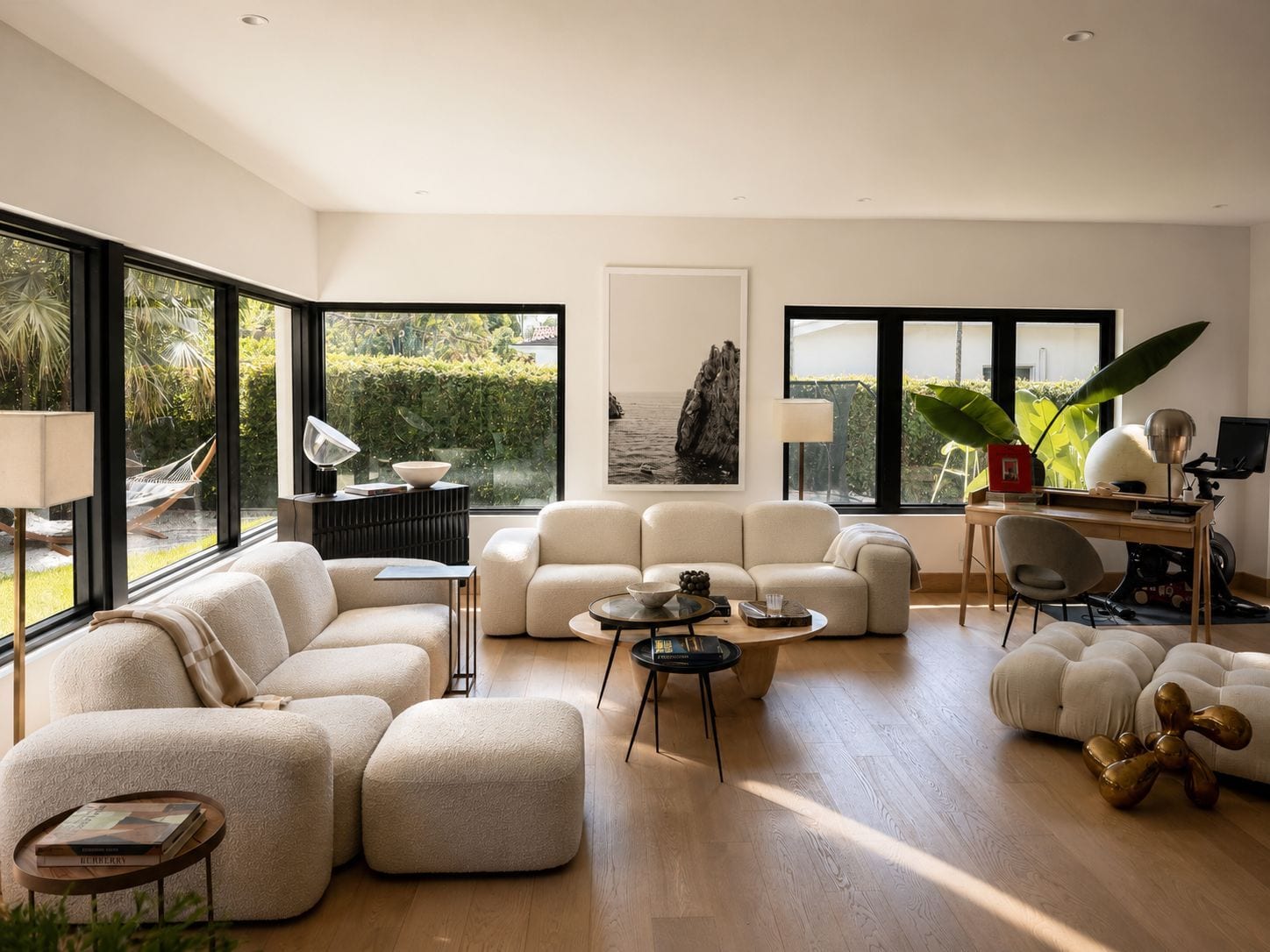 Interior Design
What this comes down to
- Organic modern is what people mean when they say they want a home that feels calm but interesting.
- The palette formula: warm white, three shades of beige-to-clay, one grounding dark, and greenery as the only saturated color.
- Four natural textures per room, minimum. The mix is what keeps minimal furniture from reading cold.
- Every organic modern room needs one near-black moment and one piece with real visual weight, usually stone.
Organic modern is the most requested style in our studio, though almost nobody arrives asking for it by name. What they say is that they want their home to feel calm but interesting — warm, but not cluttered; simple, but not severe. That request has a grammar, and it can be taught.
The style pairs the clean lines of modern design with natural materials, warm neutrals, and handcrafted texture. Its whole difficulty lies in the fact that removing color and ornament removes the two things most rooms rely on for interest, and something must take their place.
What takes their place is material, contrast, and weight. Get those three right and the room holds. Get them wrong and you have beige.
The palette formula
Organic modern palettes are narrow by design, which makes the proportions matter more than the individual choices. The formula our studio works from has four parts and rarely needs a fifth.
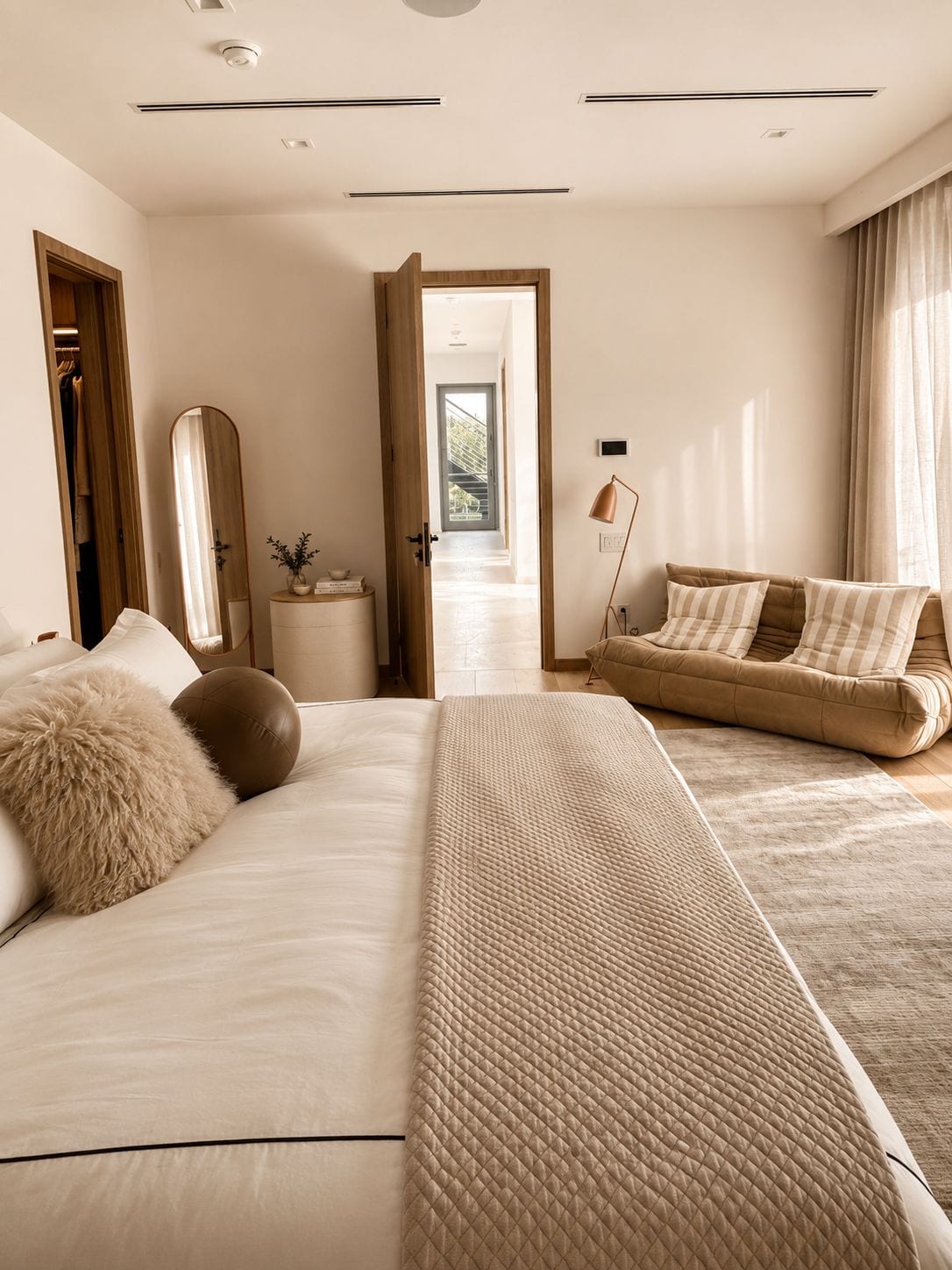
Warm white on the walls — warm, not cool, because cool white turns every natural material grey. Three shades running from beige to clay, distributed across the large soft surfaces: upholstery, rug, curtain. One grounding dark, espresso or charcoal, used sparingly and deliberately. And greenery as the only saturated color in the room, which is why a single large plant does more work here than in any other style.
The most common failure is a palette with too much beige and too little contrast. Three beiges are a palette; five are a fog.
Three beiges are a palette; five are a fog.
Material carries the style
In a room with little color and few objects, material is the entire vocabulary. A minimum of four natural textures per room, and the number is a floor rather than a target.
Linen, oak, stone, rattan, wool, ceramic. The mix is what keeps minimal furniture from feeling cold, because texture is what the eye reads when it has no color to read. A room with one texture repeated is minimalism; a room with four is organic modern, and the distance between them is entirely in the hand.
Prefer materials that record time. Oak that darkens, linen that softens, stone that takes a mark, ceramic made by a hand rather than a mould. The style's whole argument is that a room should look better after being lived in, and only certain materials can make that argument on your behalf.
The two things every room needs
Where people go wrong is not the palette or the materials. It is that the finished room has no anchor, and a room with no anchor drifts.
Every organic modern room needs one near-black moment. A steel window frame, a charcoal lampshade, a black-stained stool, the spine of the bookshelf. It costs almost nothing and it gives the eye a place to land, which is what makes the surrounding warmth read as intentional rather than as an absence of decision.
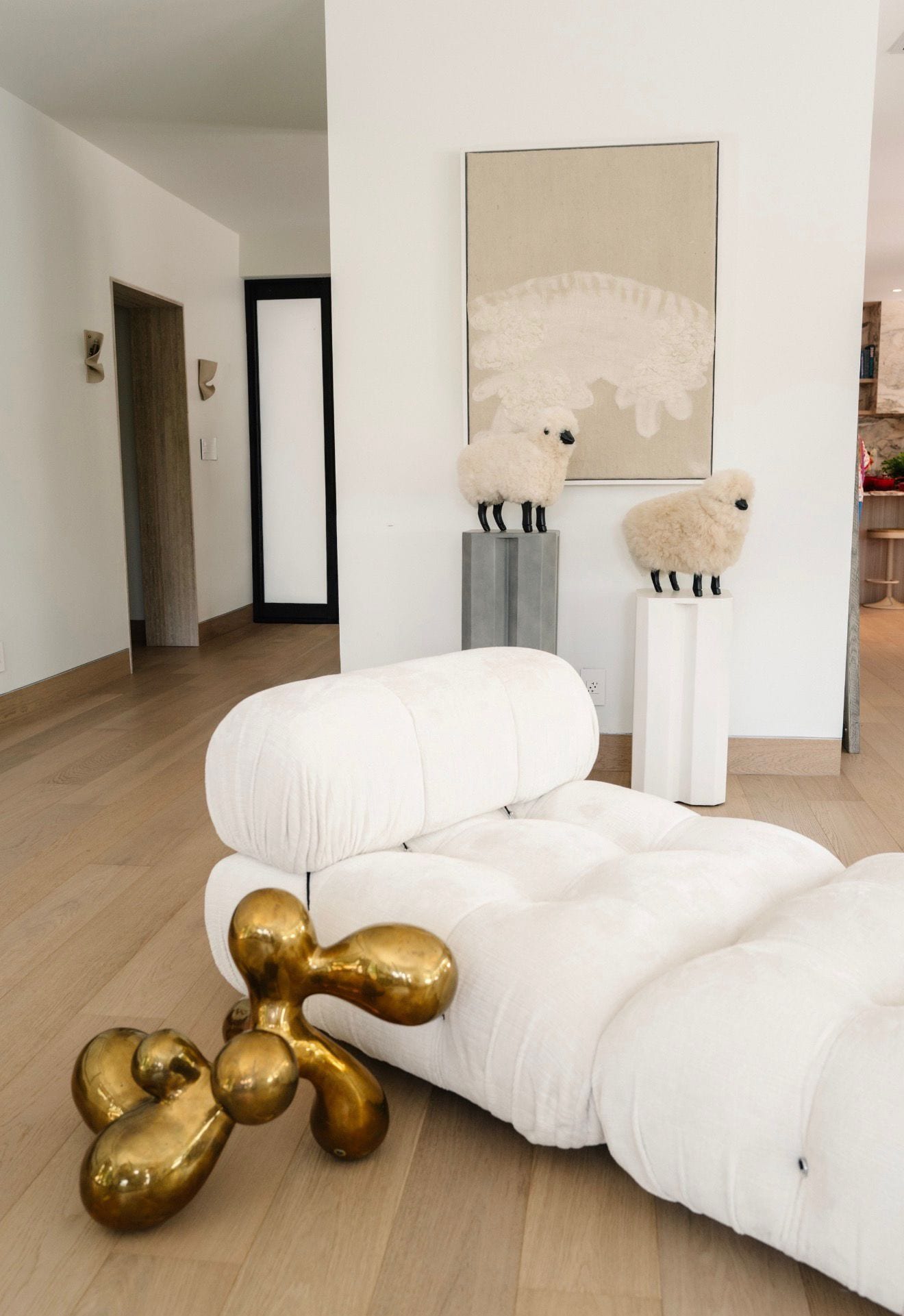
And every organic modern room needs one piece with real visual weight, which in practice almost always means stone. A travertine table, a marble ledge, a heavy ceramic vessel. Weight is what keeps a room of pale linen and light oak from floating away, and it is the single most reliable correction for a room that looks nice in photographs and feels insubstantial in person.
Light, and why overhead light ruins it
Organic modern depends on texture, and texture is revealed by raking light rather than flat light. A single overhead fixture flattens every surface in the room and removes the one thing the style has instead of color.
Layer instead. A floor lamp in the corner that grazes the wall. A table lamp at seated height. Warm bulbs throughout, always, and never a single cool one anywhere in the room, which will read as a mistake even to someone who cannot say why.
This is also the cheapest correction available to a room that is not working. Before changing the furniture, change the light and look again.
Before changing the furniture, change the light and look again.
How the style goes wrong
- Too much beige, too little contrast
- Three shades are a palette. Five are a fog. The room needs a dark to make the warmth legible.
- Texture repeated instead of mixed
- One material used everywhere is minimalism. Four in conversation is organic modern.
- Nothing heavy
- Pale linen and light oak with no stone anywhere will photograph well and feel insubstantial in the room.
- Cool white walls
- They turn oak grey, linen lifeless, and stone clinical. Warm the white and the whole palette resolves.
- One overhead light
- It flattens the texture that the entire style is built on.
Questions we're asked
What is organic modern design?
A style that pairs the clean lines of modern design with natural materials, warm neutrals, and handcrafted texture. It is what most people mean when they say they want a home that feels calm but interesting.
What colors are used in organic modern design?
Warm white walls, three shades running from beige to clay across the large soft surfaces, one grounding dark such as espresso or charcoal used sparingly, and greenery as the only saturated color in the room.
How do I keep an organic modern room from feeling boring?
Two corrections. Give the room one near-black moment so the eye has somewhere to land, and one piece of real visual weight, almost always stone. Then layer the lighting, because overhead light flattens the texture the whole style depends on.
What materials work in organic modern interiors?
Linen, oak, stone, rattan, wool, and ceramic — at least four in any room. Prefer materials that record time: oak that darkens, linen that softens, stone that takes a mark. The style's argument is that a room should look better after being lived in.
Continue reading
The language of a room
Palette, material, and proportion — the grammar underneath every space we design.