
Help Your Residents Move Into a Home, Not an Empty Box
Every lease you sign starts with an empty apartment your resident has to make feel like home — and most never really will. What that quietly costs you, and how designer-curated furnishing, with nothing operational on your end, turns a unit into a place worth staying.
 Developers
What this comes down to
- Every lease you sign begins with an empty apartment the resident has to furnish alone — and a place that never becomes home is easy to leave.
- It is not a money problem. It is blank-page overwhelm, no time, and the fear the result will look cheap. Residents need a designer to have already chosen — not a bigger store.
- We give your residents furnishing curated by an interior designer, mapped to your floor plans, with nothing operational on your end: you make the introduction, we curate, they buy it themselves.
Every lease you sign ends the same way: keys across a desk, a short walkthrough, and a resident alone in an empty apartment that is suddenly theirs to make feel like home. It is the most hopeful moment in the tenancy and the one you have the least hand in — yet what happens next quietly decides whether this becomes a home someone renews to keep, or a set of rooms they were always going to leave.
Most residents never really furnish the place. Not for lack of wanting to, but because furnishing a home well is hard and they are doing it alone at the busiest moment of a move. This is a piece about closing that gap — giving your residents furnishing already curated by an interior designer, with nothing on your end to build, stock, or ship.
A room that never becomes home is easy to leave
Retention is decided by a hundred small feelings, most of them about whether a resident belongs here. A building can get the rent, the location, and the amenity floor exactly right and still lose people who never felt at home in the one room that was actually theirs. A half-furnished apartment works against you the whole lease — and none of it shows up on a maintenance ticket. All of it shows up at renewal.
It is rarely a money problem. Residents stall for three reasons: the blank page — a floor plan, an endless catalog, and no idea where to begin; no time, because the move eats the exact weeks the furnishing needs; and a quiet fear that whatever they choose will look cheap, or read as an obvious box of things ordered online. That last fear is the one that abandons carts and leaves rooms half-done. What they need is not more options — it is someone to have already narrowed them to the ones that work.
None of it shows up on a maintenance ticket. All of it shows up at renewal.
Give them a designer, not a furniture store
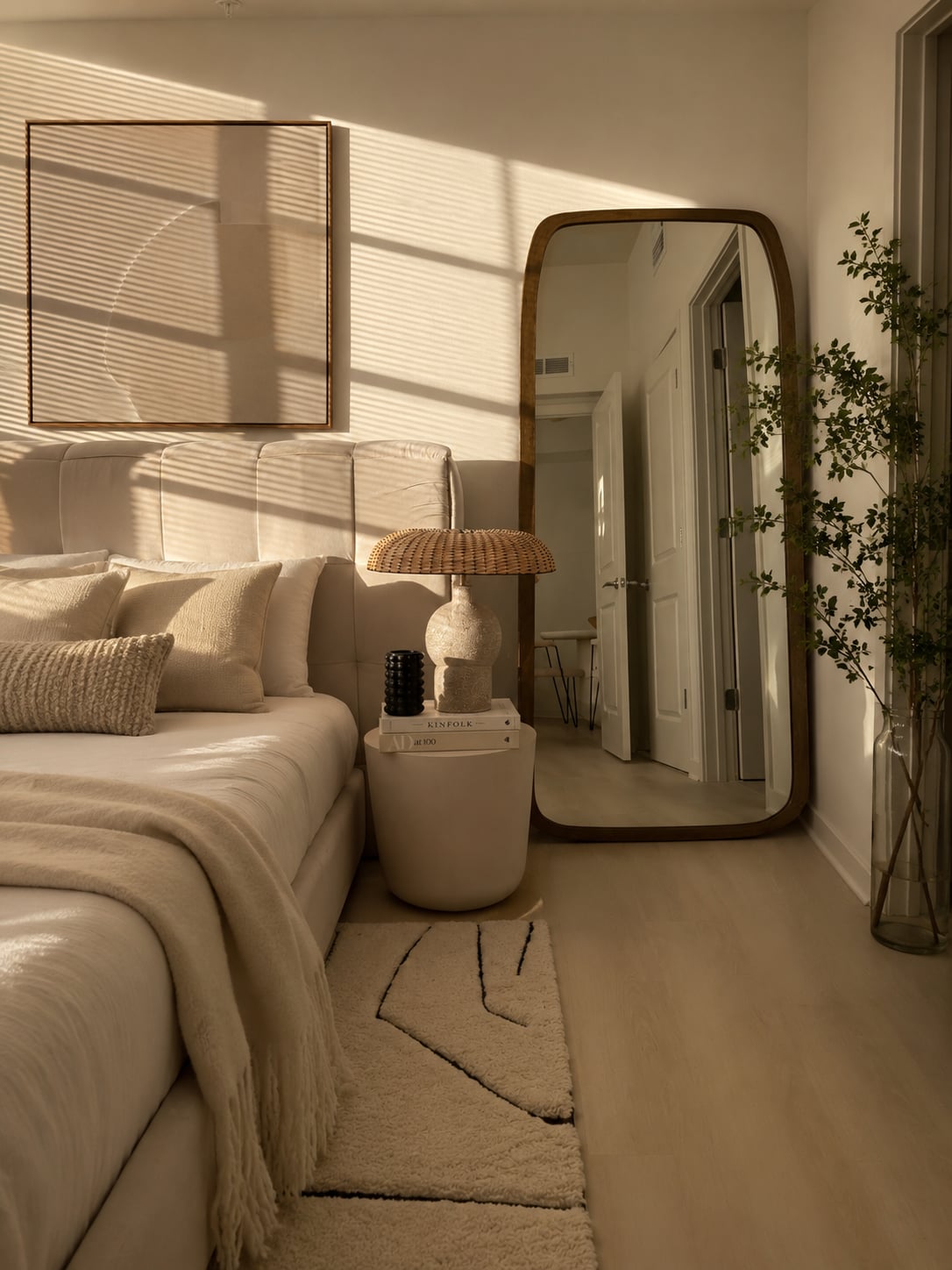
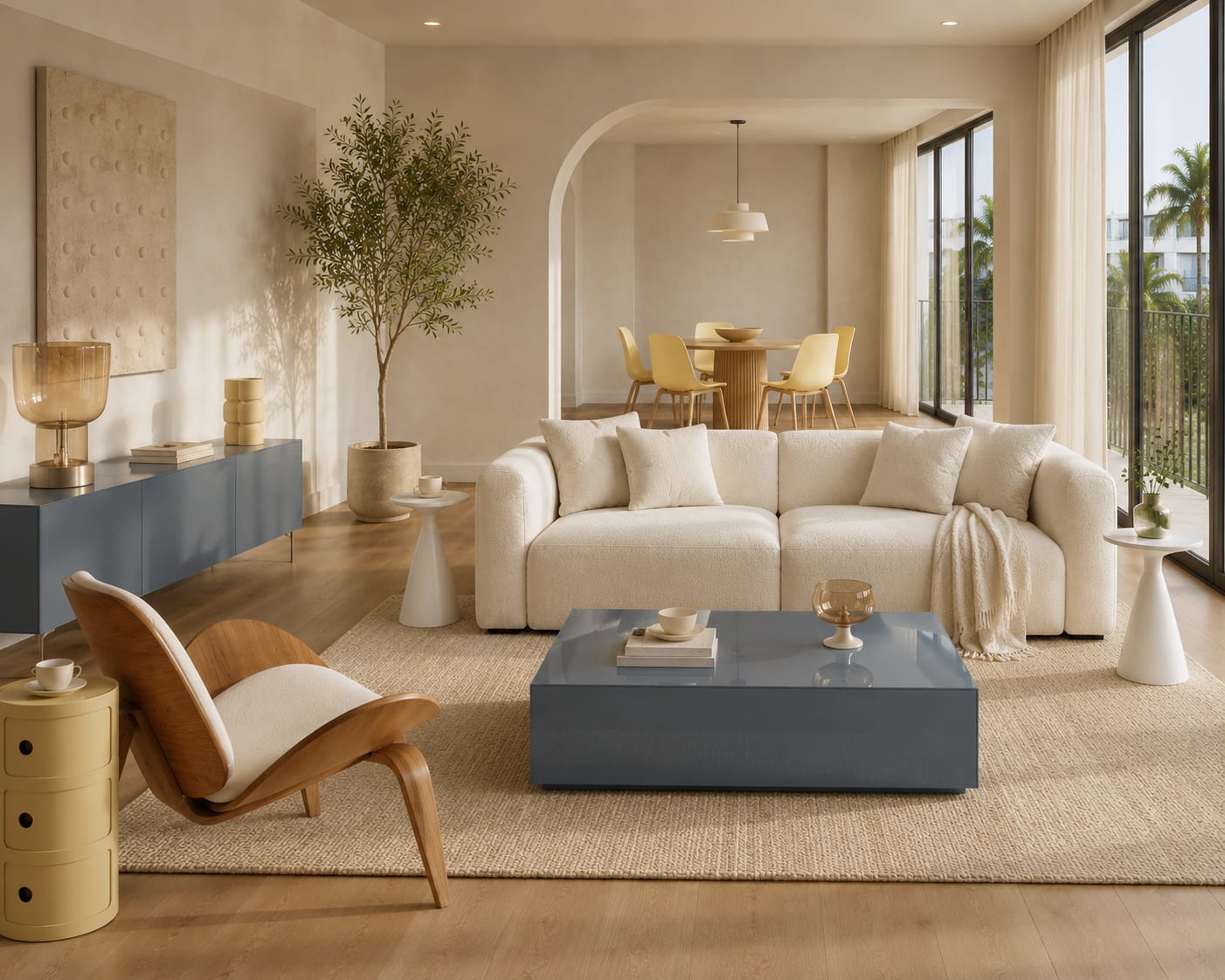
This is genuinely different from a furniture discount or a preferred-vendor list. We give your residents furnishing curated by an interior designer — the same eye that furnishes the private homes we design — organized around your building's real floor plans. A resident is not sent to a catalog; they are handed a considered starting point: rooms already composed, pieces chosen to sit well together, edits built around how a person actually lives. They keep what fits and skip what does not, and the paralysis is gone because the hard part is already done.
You can see the idea at full scale in The Apartment — a complete one-bedroom we have composed room by room, every piece already considered. That is what a resident gets a version of: not a store, but a home someone has already thought through. And because a designer curated it, nothing reads as a cheap box of online orders — which is the whole distance between a resident who furnishes with confidence and one who never begins.
What it costs you: nothing operational
The reason an operator can actually offer this is that it asks nothing operational of you. You buy no inventory, store and ship nothing, and never field a delivery question — there is no warehouse and nothing new on your balance sheet. You make the introduction; we carry the experience; residents navigate it on their own time and buy what they choose, directly. A full custom furnishing exists for anyone who wants one, but it is a request, never a requirement.
- You provide
- The introduction — a welcome email, a portal link, a line in the move-in packet. That is the extent of the lift.
- We provide
- Designer-curated furnishing mapped to your floor plans, and the whole experience residents move through to use it.
- Residents do
- Choose and buy what they want, on their own time, directly. No logistics ever pass through your office.
- Optional
- A full custom solution for a resident or building that asks for one — available on request, never the default.
We are building it now
We are piloting this with a Miami community we already design for — a 125-unit building at roughly ninety percent occupancy — mapping curated furnishing to its real floor plans, so a resident who signs a lease can move into a home rather than a project. It is early, with a partner who saw the same gap we did: that the care a building shows its residents should not stop at the unit door.
This is not our first time designing at a building's scale. We recently furnished and staged the model residence for a 960-home community in Orlando, where the whole job is helping a prospect picture a life inside a standard unit. The resident program simply hands that same designer's eye to the apartment someone actually lives in — you can walk through that model unit below.
Questions we're asked
What would we be offering our residents?
Furnishing curated by an interior designer, organized around your building's real floor plans — a considered starting point rather than a catalog. Residents keep what fits their life, skip what does not, and buy directly. The design problem, which is the thing that actually stops people, is solved before they begin.
What does it cost us to run?
Nothing operational. No inventory, no storage, no shipping, no fulfillment, and no delivery questions land on your desk. You make the introduction; we provide the curation and carry the experience; residents buy what they choose themselves. A full custom furnishing is available on request but is never required.
How is this different from a preferred-vendor discount?
A discount still leaves the resident alone with the hard part — deciding what is good and what goes together. This removes that part. A designer has already chosen, so the resident chooses among options that work rather than starting from an empty page and a fear of getting it wrong.
Continue reading
Designing multifamily, at scale
Model units, amenity floors, and the shared rooms that decide whether a building becomes a place.
Start here — the complete guide
How Developers Furnish Model Units: A Complete Guide
Model units are sales tools first and interiors second. How the furnishing decisions actually get made, where developers waste money, and what a model unit is really selling.
Amenity Space Design Trends
Clubhouses have become the leasing engine. The shifts shaping how multifamily communities design their shared spaces this year.